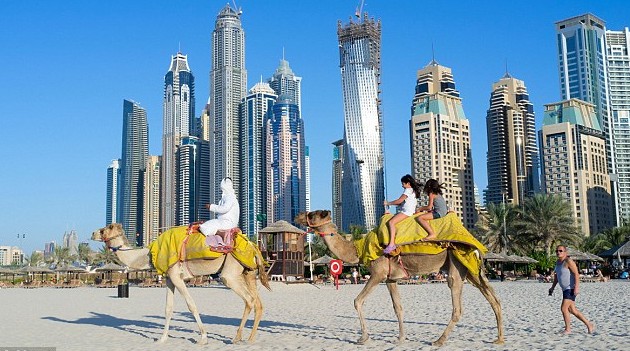
Extravagant Dubai, just a five-hour flight from Europe, holds more liberal values than many of its Middle Eastern neighbours, and this, combined with its first-rate infrastructure, have transformed the desert city into an increasingly popular tourist destination.
People from all over the world flock here for luxury breaks, shopping, partying, sunbathing, desert sports, and fine dining. Some of Dubai’s top clubs attract well-known international DJs, and with decent coral reefs in the Gulf waters diving has become a popular tourist activity.
Yet despite being far better known for its glitzy shopping malls and opulent hotels, 300-year-old Dubai isn’t completely devoid of historical heritage. Those who dig a little deeper, beyond the city of superlative’s ‘in-your-face’ opulence and glamour, can find a few remnants of its humble beginnings – before the discovery of oil.
The discovery of oil of course lead to the rapid growth of this once small fishing village. Workers from around the world came here to develop and build this mega modern city. Attracted by tax free earnings and a good quality of life the shrewd realised that they should protect their savings and looked to experts in offshore banking to take care of their new wealth for the future.
For those tourists who do want to hunt out some history while they’re there, a good place to start is the atmospheric Bastakiya District, one of the last surviving areas of ‘Old Dubai’. Exploring the narrow lanes of this small pocket of the city reveals a collection of reconstructed buildings in the region’s traditional style, complete with tall wind towers to protect the buildings’ inhabitants from the relentless desert heat.

While you won’t find much information about the structures while you’re there, you can read up about them later on your visit to Dubai Museum, which is just a short walk away.
Dubai Museum recreates the authentic sights and sounds of a souq from the pearl diving days in a reconstructed marketplace, and follows Dubai’s transition from its poverty-stricken pearling village roots to today’s huge, wealthy metropolis. The museum incorporates the al-Fahidi fort, where you can see traditional reed houses and find out more about the architecture you saw in Bastakiya District.
Just outside Dubai, history buffs can also join an excursion to visit the 16th century Hatta Heritage Village, which again showcases traditional-style village architecture including two watchtowers, a mosque and houses constructed of stone, mud, reeds and palm tree trunks built around the imposing Fort that dominates the village.
For traditional handicrafts, head to Heritage and Diving Village near the mouth of Dubai Creek in Shindagha district, where you can see weavers and potters at work keeping traditional skills alive – and find out more about the pearl diving of Dubai’s past.
Just nearby is the Sheikh Saeed Al Maktoum House, the official residence of Sheikh Saeed Al Maktoum, former ruler of Dubai (1912-1958) and grandfather of the present ruler. Located along the Dubai Creek, the house dates from 1896 but is now a museum open to the public containing rare historical photographs, coins, stamps and documents from Dubai’s history.
Another interesting sight is the Al Ahmadiya School, a restored historic school giving visitors a glimpse into the past, both in terms of the school’s architecture (including courtyards and a seven-metre-tall wind tower) and life in its classrooms. This museum of education is housed in the first regular school in Dubai, located in the Al-Ras area of Deira. Next door is a Heritage House, the oldest part of which dates back to the 1890s, with many newer parts added in later years.
So, despite first impressions, on closer inspection Dubai does reveal a glimpse of its humble past – although just a short walk from any of these heritage sites it’s hard to believe it was ever just a simple fishing village.

Leave a Comment